June 28, 2026 · 14 min read
Mindfulness Exercises for Anxiety: A Practical Guide to Finding Calm in Everyday Life
Ten beginner-friendly mindfulness exercises for anxiety, plus how to choose one, common mistakes to avoid, and what to do if your mind feels too busy.
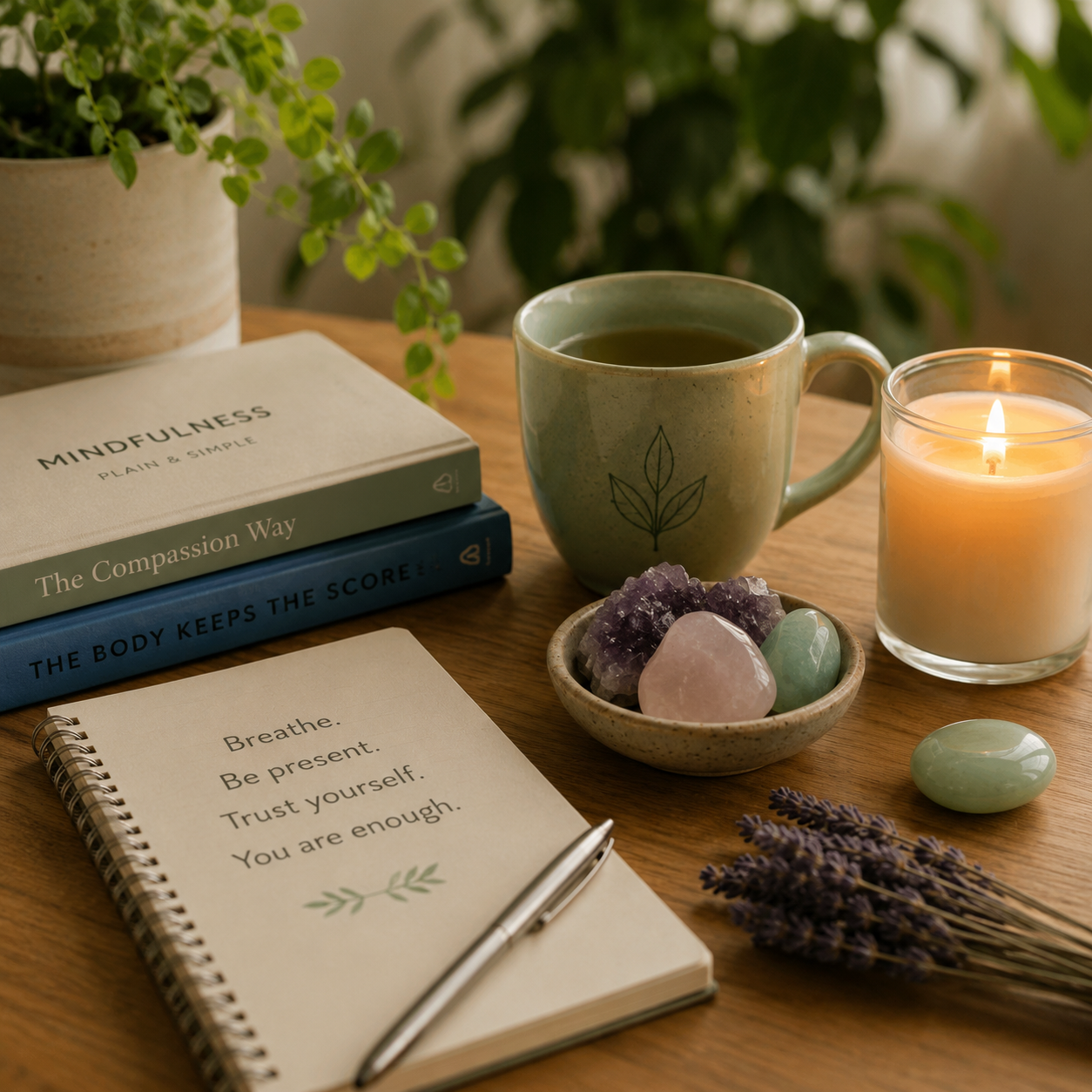
You don't have to feel calm before you can begin practicing calm. Sometimes peace starts in the middle of the very moment you wish you could escape.
If anxiety has you tense, distracted, or wide awake at 2 a.m., you've probably already tried to think your way out of it. Most of us have. The problem is that anxiety doesn't usually respond to logic. It responds to safety — and safety, for the nervous system, is something you teach the body, not the mind.
That's where mindfulness exercises for anxiety come in. They're simple, portable practices that gently signal to your body, "You're here. You're safe enough. You can soften." You don't need to believe in anything. You don't need to clear your mind. You just need a few minutes and a willingness to try.
Quick Answer: What Are Mindfulness Exercises for Anxiety?
Mindfulness exercises for anxiety are short, intentional practices that help you notice the present moment — your breath, body, senses, or surroundings — without judging what you find. They work by gently calming the nervous system, creating distance from anxious thoughts, and reminding your body that you are safe in this moment. Most can be done in under five minutes, anywhere.
What Are Mindfulness Exercises?
Mindfulness is the practice of paying attention to the present moment, on purpose, with curiosity instead of judgment. A mindfulness exercise is simply a structured way to do that — a breath count, a body scan, a slow walk, a single mindful bite of food.
These exercises aren't about achieving a special state. They're about practicing one skill again and again: noticing where you are right now and gently coming back when your mind drifts. That small "coming back" is the entire practice.
If this is new territory for you, our beginner guide — What Mindfulness Actually Is (and Isn't) — walks through the basics in more depth.
Why Mindfulness Helps Anxiety
Anxiety isn't a flaw. It's your nervous system trying to protect you. When your body senses a threat — real or imagined — it shifts into fight, flight, or freeze. Your breath speeds up. Your muscles brace. Your attention narrows toward whatever feels dangerous.
Mindfulness exercises work with this system, not against it. They send a different signal: slow breath, soft jaw, grounded feet. Over time, your body learns that the present moment is, more often than not, survivable.
Mindfulness Helps in Four Quiet Ways
It supports nervous system regulation. Slow, intentional attention to the body invites the parasympathetic nervous system to come online, which helps you settle.
It builds present-moment awareness. Most anxiety lives in the future ("what if") or the past ("why did I"). Mindfulness gently returns you to now, where most things are actually okay.
It changes your relationship with thoughts. Instead of believing every anxious thought, you begin to notice them as thoughts — not facts, not commands.
It teaches awareness rather than avoidance. Avoidance shrinks your life. Mindful awareness lets you stay with discomfort long enough to discover it doesn't have to run the show.
Mindfulness is not a replacement for therapy or medical care. It is a skill that supports those things — and for many people, a gentle first step toward feeling more at home in their own body. Our deeper dive, Can Mindfulness Reduce Anxiety?, explores the research and limits in more detail.
10 Mindfulness Exercises for Anxiety
Below are ten of the most effective, beginner-friendly mindfulness techniques for anxiety. You don't have to do all of them. Pick one. Try it for a week. Notice what shifts.
1. Mindful Breathing
What it is: A simple practice of paying attention to your natural breath, one inhale and exhale at a time.
How to do it: Sit or stand comfortably. Notice the next inhale without changing it. Notice the next exhale. When your mind wanders, gently return to the next breath. Try this for one to five minutes.
When it helps: Anytime you feel scattered, tense, or wound up — at your desk, in the car before going inside, in line at the store.
Why it may help: Slow, intentional breathing is one of the fastest ways to send a safety signal to the nervous system.
2. The 5-4-3-2-1 Grounding Exercise
What it is: A sensory grounding exercise that anchors your attention in the present using your five senses.
How to do it: Look around and name five things you can see, four things you can feel, three things you can hear, two things you can smell, and one thing you can taste. Move slowly. Let your eyes actually land on each thing.
When it helps: Racing thoughts, dissociation, the early edge of a panic spiral, or any moment your mind feels miles away from your body.
Why it may help: Sensory input pulls awareness out of anxious thinking and back into the here-and-now.
3. Body Scan
What it is: A slow, head-to-toe practice of noticing physical sensations without trying to change them.
How to do it: Lie down or sit comfortably. Bring attention to the top of your head. Slowly move down — face, jaw, shoulders, arms, hands, chest, belly, hips, legs, feet — pausing at each area to notice whatever is there. Tension, warmth, tingling, numbness, nothing at all. All of it counts.
When it helps: Before sleep, after a stressful day, or anytime you've been living mostly in your head.
Why it may help: A body scan rebuilds the connection between mind and body and often reveals stored tension you didn't realize you were carrying.
4. Mindful Walking
What it is: A walking meditation where the body's movement becomes your anchor of attention.
How to do it: Walk at a slightly slower pace than usual. Notice the feeling of your feet meeting the ground, the swing of your arms, the air on your skin, sounds around you. When your mind wanders into worry, return to the next step.
When it helps: When sitting still feels impossible. When you need to move energy through your body. Between meetings, after a hard conversation, or on a lunch break.
Why it may help: Movement plus attention is often easier than sitting meditation for an anxious nervous system.
5. Mindful Eating
What it is: Bringing full attention to the experience of eating — one bite, one breath, one taste at a time.
How to do it: Choose one bite of food. Notice the smell, texture, temperature, and flavor. Chew slowly. Pause before the next bite. You don't have to do an entire meal this way; even thirty seconds counts.
When it helps: Morning coffee, the first bite of dinner, or anytime eating has become automatic.
Why it may help: It interrupts the autopilot that anxiety thrives on and reconnects you to sensory pleasure.
6. Name What You're Feeling
What it is: A practice of labeling your emotional experience in simple, honest language.
How to do it: Pause and ask, "What am I feeling right now?" Name it gently. "Anxiety is here." "There's some sadness." "My chest feels tight." That's it. You don't have to fix the feeling — just notice and name it.
When it helps: When emotions feel tangled, overwhelming, or hard to identify.
Why it may help: Naming what you're feeling tends to take the edge off the intensity and creates a small but important distance between you and the emotion.
7. The Self-Compassion Pause
What it is: A brief practice of meeting your own difficulty the way you'd meet a good friend's.
How to do it: Place a hand over your heart or wherever feels comforting. Say silently: "This is a hard moment. Hard moments are part of being human. May I be kind to myself right now."
When it helps: After a mistake, during self-criticism, in the middle of an anxious spiral, or when you notice you're being unkind to yourself.
Why it may help: Self-compassion has been linked in research to lower anxiety and greater emotional resilience over time.
8. Progressive Muscle Relaxation
What it is: A body-based practice of gently tensing and then releasing each muscle group.
How to do it: Starting at your feet, tense the muscles for about five seconds, then release for ten. Move up the body — calves, thighs, belly, hands, arms, shoulders, face. Notice the contrast between tension and release.
When it helps: Before sleep, after long stretches of bracing, or when anxiety lives mostly in your body.
Why it may help: Many of us hold anxiety as physical tension we no longer notice. Releasing it deliberately can ease the nervous system as a whole.
9. Five Mindful Breaths
What it is: A pocket-sized reset you can do almost anywhere.
How to do it: Pause whatever you're doing. Take five slow, full breaths. Count them silently. That's the whole exercise.
When it helps: Before a difficult email, between Zoom calls, at a stoplight, before walking into a room that makes you anxious.
Why it may help: Tiny, repeatable practices add up. Five breaths, five times a day, can change a whole afternoon.
10. Gratitude Awareness
What it is: A brief practice of noticing what is steady, working, or kind in your current moment.
How to do it: Pause and notice three small things that are okay right now. A warm mug. A familiar voice. Sunlight on the floor. Don't force the feeling — just name what's there.
When it helps: When anxiety has narrowed your attention onto everything that's wrong.
Why it may help: Anxiety has a way of erasing the ordinary good. Gratitude awareness gently widens the lens.
Which Mindfulness Exercise Should I Start With?
There is no single "best" mindfulness exercise. The right one is the one you'll actually do. Use this as a starting map.
If You're Brand New to Mindfulness
Start with Five Mindful Breaths or the 5-4-3-2-1 grounding exercise. Both are short, concrete, and almost impossible to do "wrong."
If You're Busy and Short on Time
Try mindful breathing at red lights, the self-compassion pause between meetings, or mindful eating during your first sip of coffee. Our guide How to Start a Mindfulness Practice if You're Busy has more ideas for tight schedules.
If You're in the Middle of a Panic Spiral
Reach for grounding first. 5-4-3-2-1 or naming what you're feeling can interrupt the cycle. Mindful breathing comes more easily once your body has settled a little.
If Your Mind Is Racing
Try a body scan, mindful walking, or progressive muscle relaxation. When the mind won't slow down, the body is often a better entry point.
If You're Stressed at Work
Five mindful breaths. The self-compassion pause. A short mindful walk to the water fountain. Small, invisible, and surprisingly effective.
If You're Having Trouble Sleeping
A body scan or progressive muscle relaxation in bed can help your nervous system shift gears. Keep it slow. There's nowhere to be.
Common Mistakes to Avoid
Most people don't fail at mindfulness. They just expect the wrong thing. Watch for these gentle traps.
Trying to Empty Your Mind
Mindfulness is not about having no thoughts. It's about noticing thoughts and not believing every one. If your mind wanders a hundred times, that's a hundred chances to practice coming back.
Expecting Instant Calm
Some practices will feel peaceful. Others will feel like watching laundry tumble. Both are valid. Calm is a frequent byproduct, not a guaranteed outcome.
Judging Yourself
There is no good or bad meditator. The whole practice is meeting yourself, including your distracted, frustrated, anxious self, with a little more kindness than you did a minute ago.
Giving Up Too Early
It often takes a few weeks of consistent practice before the benefits become noticeable. Five minutes a day for a month is far more powerful than one perfect 30-minute session.
Trying to Do It Perfectly
Perfectionism is anxiety in disguise. If your practice has to look a certain way to count, it isn't really mindfulness anymore. Imperfect is the only version that exists.
If mindfulness has felt unusually hard for you, you're not alone — our post Why Mindfulness Feels Hard for Some People may help you understand why, and what to try instead.
Where Reiki Fits Into a Mindfulness Practice
For some people, mindfulness alone is enough. For others, an experiential practice like Reiki creates the kind of slow, supported environment in which mindfulness becomes easier to access.
Reiki is a gentle, non-invasive energy healing practice that many people find deeply relaxing. It doesn't replace psychotherapy or medical care, and it isn't a treatment for anxiety. But some clients describe Reiki as a way to drop into their bodies and out of their heads — and from that softer place, mindful awareness often comes more naturally.
At Inner Peace Counseling, Reiki is one of several optional experiential practices that clients may choose to integrate into their counseling — never required, always paced to what feels supportive for you.
Frequently Asked Questions About Mindfulness Exercises for Anxiety
A Final Reflection
Anxiety often tells you that something needs to be fixed before you can rest. Mindfulness offers a quieter possibility: you can begin to rest now, in small ways, even while parts of life still feel unfinished.
Slow down. You don't have to do this perfectly. Be present. The next breath is always available. Trust yourself. Your body already knows how to settle when it feels safe enough to try.
One five-minute practice today is more powerful than the perfect practice you keep waiting to start.
Ready to Bring Mindfulness Into Counseling?
At Inner Peace Counseling, we offer mindfulness-based, experiential psychotherapy in Virginia Beach and via telehealth across Virginia. Sessions are tailored to you — blending evidence-based therapy like ACT and CFT with mindfulness, somatic awareness, and, when it aligns with your goals, optional Reiki.
If you'd like a slower, more embodied space to work through anxiety, we'd be honored to support you.
Disclaimer
This article is for educational purposes only and is not a substitute for medical or mental health treatment. Mindfulness and Reiki are complementary wellness practices that may support relaxation and overall well-being but are not intended to diagnose or treat anxiety disorders or other medical or mental health conditions. If anxiety is significantly affecting your daily life, please consult a qualified healthcare professional.